Muslim Woman Re-Marry Khula Faskh or 3 Talaq
How Can a Muslim Woman Remarry After Talaq, Khula or Faskh?
A Muslim woman may be able to remarry after Talaq, Khula, or Faskh, but the Islamic requirements depend on how the previous marriage ended and whether the woman has completed her required Iddah (waiting period). Understanding the difference between Talaq, Khula, and Faskh is important before entering into a new Islamic marriage or Nikah.
Can a Muslim Woman Remarry After Talaq?
After a valid Talaq, a Muslim woman generally must complete her applicable Iddah before marrying another man. The rules can differ depending on whether the divorce was the first, second, or third Talaq, whether she is pregnant, and other circumstances.
If the husband gave a first or second Talaq and the Iddah has ended, the former marriage has ended and the woman may marry another man through a new Nikah, provided the Islamic requirements for marriage are fulfilled. If the divorce was a third and final Talaq, different rules apply before the former spouses can return to each other.
Therefore, a Muslim woman who has received Talaq should confirm the exact circumstances of the divorce and completion of Iddah before arranging another marriage.
Can a Muslim Woman Remarry After Khula?
Khula is a form of Islamic marital dissolution generally requested by the wife. After a valid Khula, the previous Nikah is terminated, and the woman cannot simply continue the previous marriage without a new Nikah. A recognized Islamic ruling describes Khula as having the effect of an irrevocable divorce, meaning that returning to the former husband requires a new marriage contract.
Before marrying someone else, the woman must observe the applicable Iddah. There is scholarly difference concerning the length of Iddah after Khula; therefore, a woman should obtain guidance from a qualified Islamic scholar or Shariah authority based on her particular circumstances.
Once the required Iddah has been completed, a Muslim woman can generally proceed with a new Islamic marriage if all conditions of Nikah are satisfied.
Can a Muslim Woman Remarry After Faskh?
Faskh is an Islamic judicial dissolution or annulment of a marriage. It may be considered in circumstances where serious marital problems exist and the marriage cannot reasonably continue, subject to the applicable Islamic jurisprudence and the authority reviewing the case.
After Faskh, the previous Nikah is dissolved. A woman seeking to marry another Muslim man should first establish that the Faskh has been validly completed and that the applicable Iddah has ended. She can then enter into a new Nikah when the Islamic requirements for the new marriage are fulfilled.
Because the details of Faskh and Iddah can vary according to the circumstances and school of Islamic jurisprudence, it is important to obtain a formal Islamic determination rather than assuming that a civil divorce automatically answers every religious question.
Can She Marry Someone Else After Islamic Divorce?
Yes, after a valid Islamic divorce or dissolution and completion of the applicable Iddah, a Muslim woman may generally marry another eligible Muslim man through a new Nikah. The previous marriage does not prevent her from establishing a new Islamic marriage once the requirements have been fulfilled.
It is also important to distinguish civil divorce from Islamic divorce. A civil court may dissolve a marriage under state, provincial, or federal law, while an Islamic divorce or Faskh concerns the religious status of the Nikah. Depending on the circumstances, a Muslim couple may need to address both civil and Islamic aspects separately.
What Documents May Be Needed for a New Nikah?
Depending on the Islamic authority, mosque, or Shariah service handling the marriage, a woman may be asked to provide documentation showing the status of her previous marriage. This can include a Talaq certificate, Khula certificate, Faskh certificate, Nikah certificate, civil divorce judgment, or other relevant documentation.
Keeping proper Islamic divorce documentation can help avoid uncertainty when applying for a new Nikah and can provide evidence that the previous Islamic marriage has been properly dissolved.
Islamic Divorce and Remarriage Services in the USA & Canada
Are you a Muslim woman who is a victim of domestic violence, an abusive marriage, abandonment, or an abusive life and are you looking to file Khula or Faskh? Follow the link to file your case.
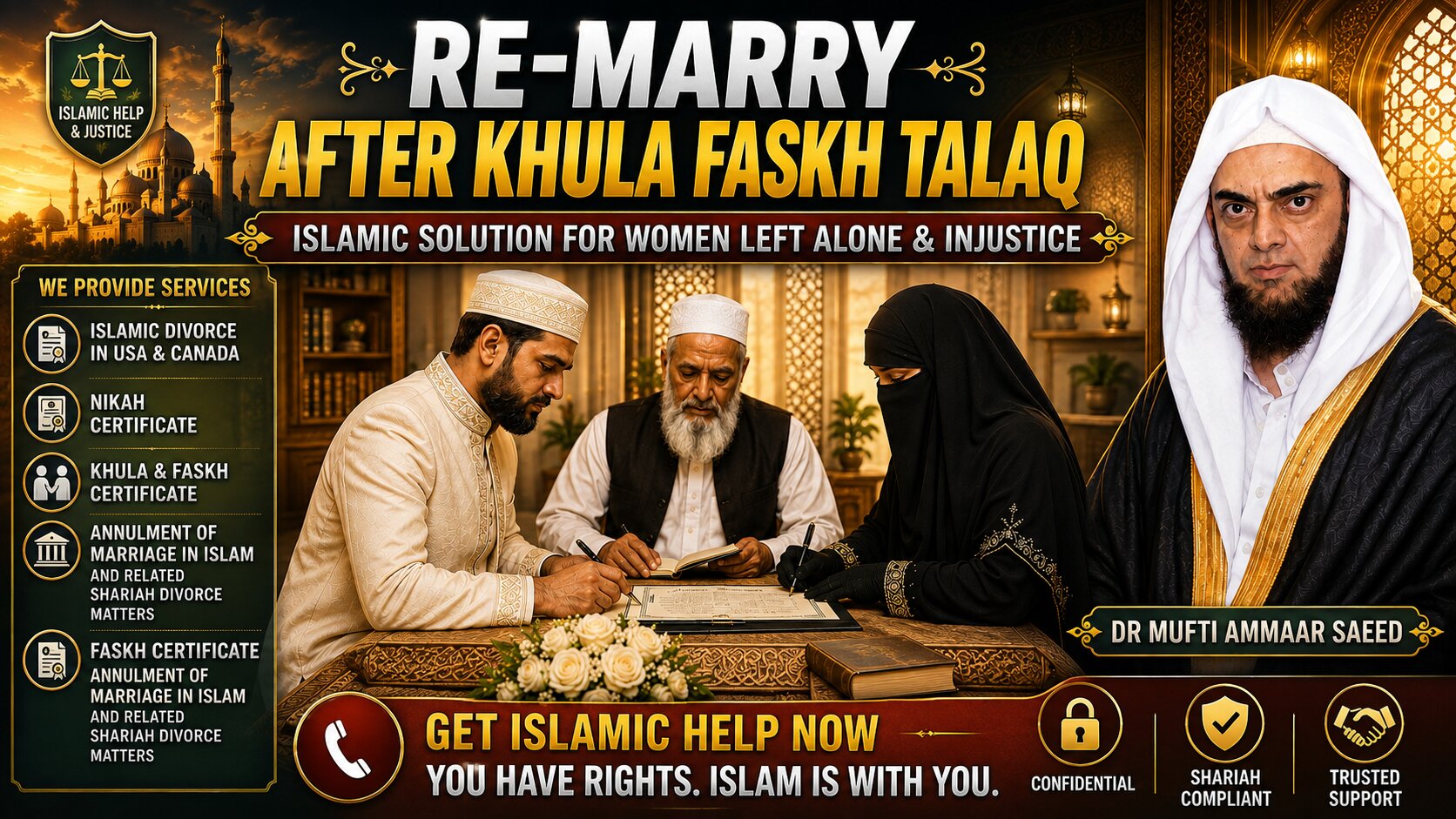
We provide assistance relating to Islamic divorce in the USA and Canada, including Nikah certificate services, Khula and Faskh certificates, Islamic marriage annulment, annulment of marriage in Islam, Faskh certificate, and related Shariah divorce matters. Our services are intended to help Muslims understand and document the religious status of their marriage and divorce according to the applicable Islamic process.
If you are a Muslim woman seeking Khula or Faskh in the USA or Canada, you can learn about the process, submit the relevant information about your marriage, and seek assistance concerning your Islamic divorce case. If you are experiencing immediate domestic violence or are in danger, prioritize your safety and seek appropriate local emergency or domestic-violence assistance.