
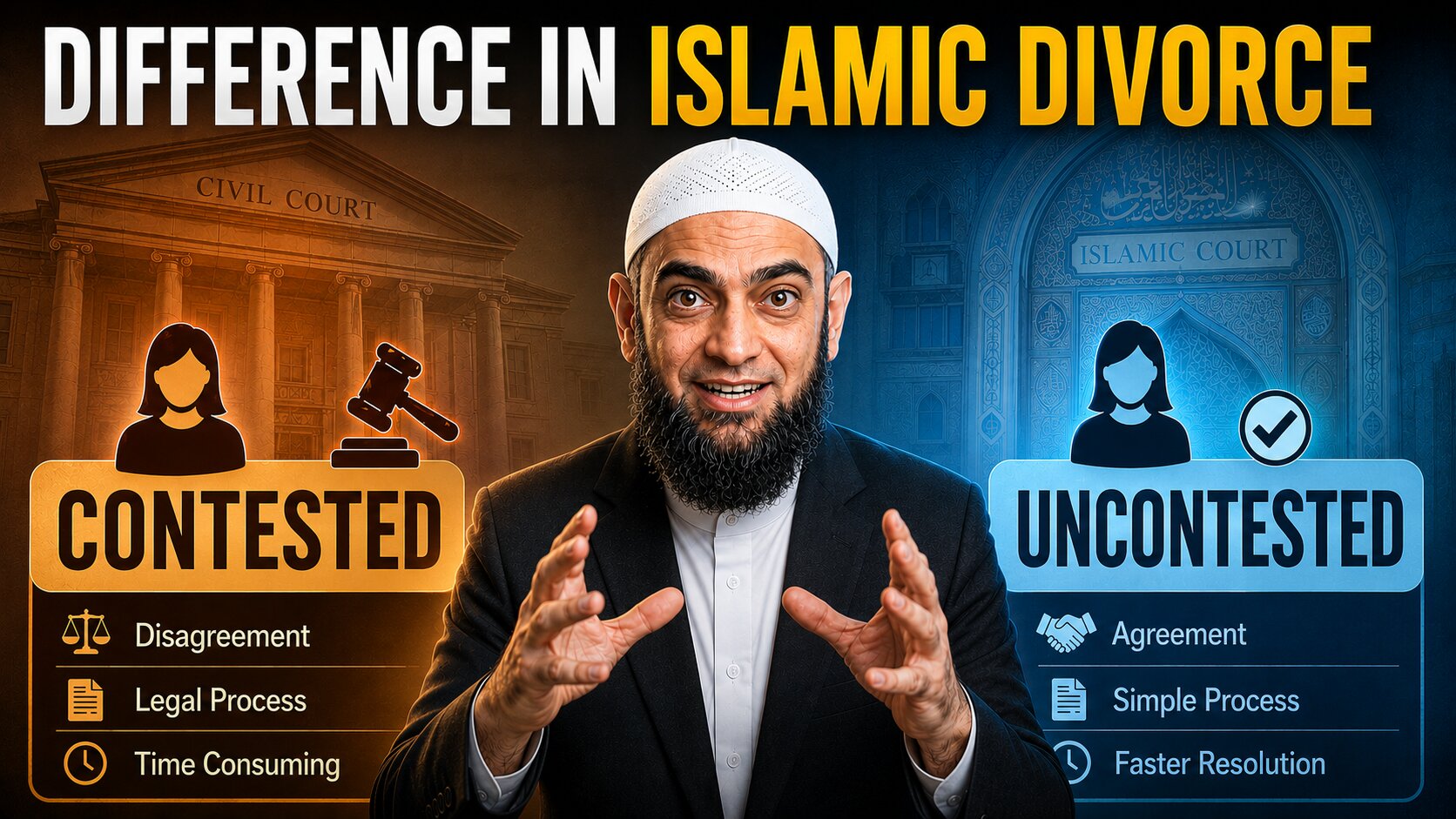
Islamic Divorce Contested and Uncontested
Difference Between Contested and Uncontested Islamic Divorce (Khula & Faskh)
Understanding the difference between contested and uncontested Islamic divorce is essential for Muslim couples seeking a Shariah-compliant solution to marital disputes. Whether you are considering Khula, Faskh, or another form of Islamic divorce, knowing the legal and Islamic process can help you make informed decisions while protecting your Islamic rights.
What Is a Contested Islamic Divorce?
A contested Islamic divorce occurs when one spouse disagrees with or opposes the divorce request, or when there is a dispute regarding the grounds for dissolution of the marriage. In many cases, the matter requires review by qualified Islamic scholars, Muftis, or a Shariah council to examine evidence and determine whether Islamic grounds for divorce have been established.
A contested Islamic divorce commonly involves:
- Domestic violence or physical abuse
- Emotional or psychological abuse
- Financial neglect or abandonment
- Failure to fulfill marital obligations
- Disputes regarding the validity of the marriage
- Cases requiring witness statements or supporting evidence
- Issuance of a Faskh (Judicial Dissolution) after a Shariah review
Because the parties disagree, the process generally takes longer and requires careful examination to ensure the decision complies with Islamic law (Shariah).
What Is an Uncontested Islamic Divorce?
An uncontested Islamic divorce is more like a Khula and Faskh as well. It occurs when both spouses agree without dispute or the woman woman present enough evidence to show the history of abusive life and domestic violence and approach the shariah council to declare as Faskh (Annulement of Marriage). to end the marriage peacefully and cooperate throughout the process. Since there is no dispute regarding the dissolution of the marriage, the Islamic divorce can usually be completed more efficiently.
An uncontested Islamic divorce may or may not include:
- Mutual agreement between husband and wife
- Cooperative Khula proceedings
- Agreement regarding Mahr (dowry), where applicable
- Simplified documentation
- Faster review and issuance of Islamic divorce certificates
- Respectful resolution according to the Qur’an and Sunnah
When both parties cooperate, the process is generally simpler, less stressful, and completed in a shorter period while remaining fully compliant with Islamic principles.
Contested vs. Uncontested Islamic Divorce
The primary difference between contested and uncontested Islamic divorce is whether the spouses agree to end the marriage.
In a contested divorce, one party disputes the divorce or its grounds, requiring a formal Shariah review and decision before a Faskh or other Islamic ruling can be issued.
In an uncontested divorce, both spouses mutually agree to dissolve the marriage, allowing the Islamic divorce process to proceed more smoothly with fewer disputes and less documentation.
Regardless of whether the case is contested or uncontested, every Islamic divorce should be handled fairly, professionally, confidentially, and according to the principles of the Qur’an, Sunnah, and recognized Islamic jurisprudence.
Muslim Women Seeking Khula or Faskh?
Are you a Muslim woman experiencing domestic violence, emotional abuse, abandonment, or an abusive marriage and looking to file Khula or Faskh? Our Shariah services are designed to help eligible applicants navigate the Islamic divorce process with professionalism, confidentiality, and compassion.
Follow the link below to begin your Islamic divorce application.
Our Islamic Shariah Services
We provide a range of Islamic family law services, including:
- Islamic Divorce Services in the USA and Canada
- Khula Applications
- Faskh (Judicial Dissolution of Marriage)
- Khula Certificates
- Faskh Certificates
- Islamic Annulment of Marriage
- Nikah Certificate Services
- Islamic Marriage Documentation
- Shariah Family Law Consultation
- Islamic Divorce Verification Letters
- Guidance on Islamic Divorce Procedures
- Assistance with related Shariah matrimonial matters
If you are seeking an Islamic solution to your marital situation, our experienced team is committed to handling your case with confidentiality, fairness, and adherence to the principles of Islamic law. Contact us through the application link to begin the process.